Organelle Blog
Mitochondrion
Mitochondria
Structure:
They are rod-shaped organelles which have two membranes; an inner and an outer. [1] The inner layer contains a structure called cristae and the outer layer acts as a skin. It contains a liquid called the matrix which flows on the inside of the mitochondria. [2] Additionally, they are measured in sizes ranging from 1 to 10 micrometers in length.
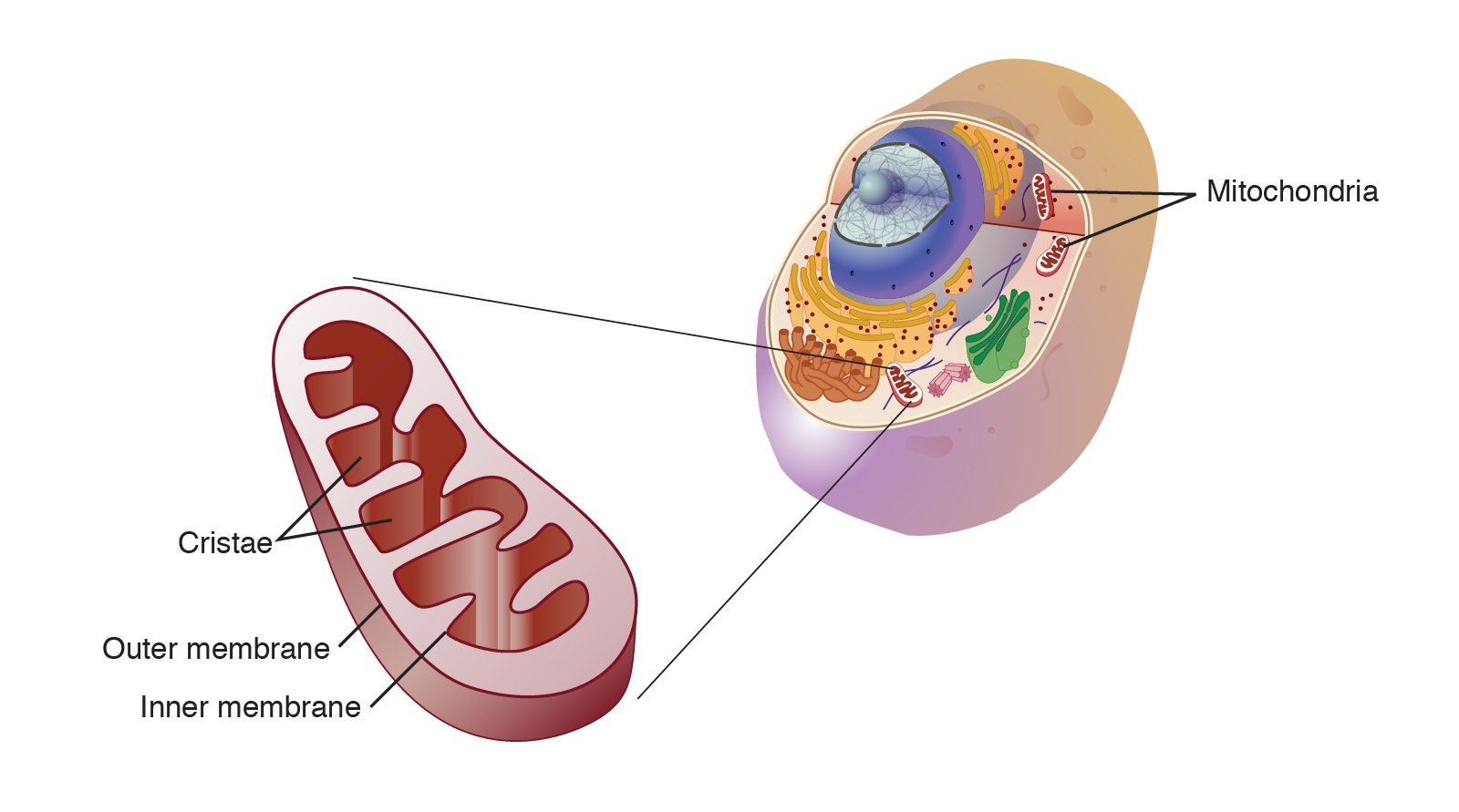
Sources (pictures and videos):
Functions:
They act as the digestive system; taking in nutrients, breaking them down, and then creating molecules for the cell. These molecules that come out are rich in energy due to the fact of the Mitochondria being known as the powerhouse of the cell. The mitochondria plays a big role in converting food energy to ATP. When we consume food, we aren’t able to use the energy from that food directly, that is why it is converted.
Malfunctions:
When absent or damaged, the body won’t be able to process enough energy when needed. There are certain cells in your body which require a lot of ATP, so without the conversion happening you may tend to get tired faster, or you won’t be able to properly think well. Associated Biomolecules: [4]
The Mitochondria contains two types of biomolecules. One being proteins, and the other is phospholipids, which is a type of lipid. The Mitochondria is also associated with carbohydrates because of the process of cellular respiration, which is used to make ATP energy. This also explains why the Mitochondria is known as the powerhouse, creating tons of energy.Working with other Organelles: [5] [6] [7]
- Endoplasmic Reticulum: Lipids that are imported to the Mitochondria are from here.
- Peroxisomes: They both can produce ROS, and Mitochondria are used to form Peroxisomes.
- Lysosomes: Lysosomes recycle the waste that the Mitochondria doesn't digest.
- Chloroplast: This is the site of photosynthesis, meaning they work together in converting energy.
- Cell membrane: It blocks out unwanted materials, which helps keep it healthy.
Fun Fact:
- Mitochondria are able to change shape to move around the cell, if necessary.
Comments
Post a Comment